Saturday, January 28, 2017

Ideas to Encourage Speech & Language Development in Toddlers

Children develop speech and language skills at their own rate, which means some children are perfectly on schedule with what textbooks and websites say, some are a little slow to talk, and some demonstrate advanced skills.  Regardless of where a child is with their speech or language, I am often asked, "I think my child might be delayed, what can I do to help him talk more?"  Well, this post is dedicated to answering that question.  I've put together a list of ideas and activities to do with your toddler to encourage more language production and work on age-appropriate speech sounds.   

For a child who is around 2 years of age, the sounds they should be starting to master are the ones they produce mainly with their lips:  /b/ /p/ /m/ /w/, as well as /n/ & /h/.  Focus on these sounds while doing language stimulation activities with your child:

1. Play around with these sounds in the mirror.  Make silly sounds, simple words, or animal sounds and see if your child will imitate (ba, be, bo, bye, bay, bob, beep, boom, etc.).  For example: Mom says, "baba" while pointing to her mouth, then point to child's mouth and say, "Your turn."  Wait at least 5 seconds, then repeat if the child didn't imitate.  Children also like videos, so you can even do this while recording this activity on your phone or tablet, then watch it with your little one when you are done.  Oftentimes children imitate sounds/words a second time when watching the video.  If your child doesn't respond well to direct activities like this, just model these silly sounds during play.

2. Use simple 1-2 word phrases when talking with your child, get down at their level so they can see mouth movements and the way sounds are produced.  

3. Speak slowly.  I feel like I am always saying, "We need to hurry!"  As I am rattling off a list of things for my daughter to do so we can leave the house.  We get so caught up in the hustle of everyday life that we often push our little ones to "hurry hurry!"  all while throwing tons of language at them, spoken at a very fast rate.  All children benefit when we slow our rate of speech & model good conversational turn-taking skills (eye contact, getting down at their level, body directed towards your listener, wait for child to respond, etc.).

3.  If your child says something and it sounds like gibberish,  but you understand what they want based on context, model the words you think they are trying to say. Example:  Child: "Bbash tisad"  while pointing to the milk, Mom: "Want milk? Okay. Here's milk. Milk. Yummy Milk."  Then hand them the milk, "Mmm milk!"

3. Sing simple nursery rhymes and children's songs with your child, as the lyrics have many of the early developing sounds a toddler should be starting to master.

4. During play, model environmental sounds like car sounds, silly sounds, and animal sounds and see if your child will imitate.

5.  When trying to get your child to imitate a word (stick to 1-word phrases), give them the model, wait 5 seconds, prompt one time for them to say it, wait 5 seconds, then move on.

6. Bubbles are great a great way to work on language, because most all kids LOVE bubbles.  Have your child request "more" or "bubble."  Talk about popping the bubbles, "pop!" or where the bubbles are, "up" "down."  Even things like, "Uh oh," "all gone."  "bye bye." Etc. 

7. Offer a choice of 2 items.  Even when you know your child just wants milk, offer milk or water--label each one, "Milk? Water?"  Wait the 5 seconds, if your child points to milk, label "Milk, want milk?"  Wait 5 seconds, then label it a few more times, "Milk, yummy milk."  and give them the milk, even if they didn't imitate.

8.  If your child is struggling to produce words, baby sign language can be a nice bridge to verbal communication.  I like to focus on one sign at a time and start with one handed signs like "milk," "eat" or "drink."  Chose something that will be rewarding to your child and model the sign as close to your face/mouth as possible.  Always say the verbal production of the word while modeling the sign as well.  Baby Sign Language is a great resource.  You can look up a sign, watch a video, and even print off a picture of the sign to color with your child.  I tell parents to hang it on the fridge or a high traffic area so both you and your child will see if often.

Biggest things to remember:

  1. Label label label and repeat repeat repeat.  The more your child hears it, the better!

  2. WAIT.  Too often we tell a child, "Say milk, milk. Do you want milk? Say milk?"  All without even pausing to give the child a chance to say it. It can be hard, so I tell parents to literally count to 5 in their head.

  3. Use simple phrases when talking with your child.  1-3 words max.

  4. PLAY! Talk about what you are doing, what he is doing, make silly sounds, and most important have fun!

  5. Reward immediately. If your child requests using real, clear words, or imitates you after you have modeled a word or sign, give them what they asked for as soon as possible!

  6. Slow down while talking with your child.

I usually tell parents to hang this list on the fridge, look at it every morning and pick one thing they are going to focus on that day with their child. Once or twice a day for 5-10 minutes is all it takes! Please remember, however, that this blog and the information I provide is for educational purposes and is NOT meant to be a replacement for therapy provided by a licensed speech-language pathologist. If your toddler demonstrates delayed speech or language skills, I encourage you to seek out a speech-therapist in your area, or contact your local Infant-Toddler Program to see if they qualify for therapy. 

Friday, January 27, 2017

Free App Friday!


This week Smart Apps For Kids has a nice list of the top 50 apps that are free on iTunes, so check it out!  Also, Best Apps For Kids has a list of free apps as well as Free App Friday.  Enjoy and have a wonderful weekend.

Thursday, May 14, 2015

Apraxia Awareness Day

Today is Apraxia Awareness Day!! Be sure to check out this post to learn more about Apraxia and ways to get involved. Here is an updated list of ways to get involved. 

Wednesday, September 3, 2014

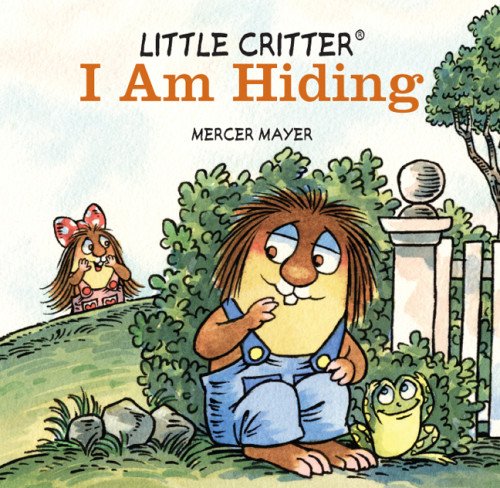
I Am Hiding!

I recently stumbled across "I Am Hiding" by Mercer Mayer and got a little too excited about how perfect it would be for targeting several language concepts.  Each page is very simple, with repetitive text that could be used for working on the pronoun, "I," the be-auxiliary, "I am," action words, and verb+ing.  It could even be used for targeting other pronouns such as "he" and "she" as you describe what the brother/sister is doing.   


Here are some simple ways to work on each of these targets as you read this book with your child, create a group activity for your class, or work with a student in therapy:

Pronouns: 
  • When targeting "I" just have the child repeat the phrase on each page word for word. ("I am sneaking.")
  • If the target is he/she, describe what the brother or sister is doing and have the child repeat the phrase.  Or ask them, "What is he doing?"  ("He is resting."  "She is looking.")
Be-Auxiliary ("I am"):
  • Have the child repeat each phrase in the book. ("I am hopping")
  • After reading each page, have the child act it out and describe what they are doing. ("I am creeping.")
Action words/verb+ing:
  • Label each action for the child and have them repeat it.
  • If they are at the phrase level, have them repeat each sentence after you read it.
  • Again, simply having them act out the action on the page, and then label it is a great way to work on action words.  
Large Group/Small Group:
  • Give each child a copy of the book so they can follow along as you read it. 
  • Act out the actions on each page and have the children repeat the phrase from the book. 
  • Have the children describe what other children are doing to target the pronouns he/she. "What is Sarah doing" "She is jumping."  or "Who is looking" "She is!")
  • Play hide-and-go seek at the end and have the child 'seeking' use the phrase, "I am" as they are looking. ("I am looking."  "I am walking."  "I am stretching")
  • Once they find the child that was hiding, ask the class, "Who did he find?"  Then have the class repeat either "her" or "him" to target those pronouns.  If you were still working on children's names, you could have them say the child's name. 
For additional activities, Speaking of Speech has a great section on targeting verbs, including "I am." 

Friday, August 1, 2014

Summertime, Booktime!

I know I have been very scarce with posts during this summer break, but as I begin my new job I hope to get back in the swing of things. In the meantime, I had to share some great books I have run into that would be wonderful for both therapy and large groups.  The first one was read at my daughter's story time at the library the other day.  It is called, "Jump" by Scott M. Fischer. 

It is a great story that could target animal names and actions.  Each animal "JUMPS" away from the animal they meet, with repetitive text that would be easy for imitation of words and actions while reading it.  I found this fun song that could even go along with it:
I am already planning a fun large group with this one!
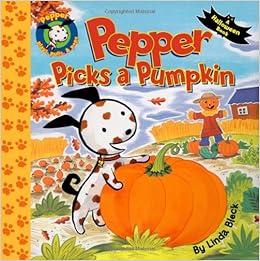
The next one is called, "Pepper Picks a Pumpkin" by Linda Bleck.  This one may be a little harder to find, but is a great one for individual therapy focusing on /p/.  Honestly, just reading it word for word provides some great auditory bombardment.  


The last book is another fun one from the library.  It is called "If You See a Kitten" by John Butler.  This is one that could be used for both individual and group therapies.  It has simple text that focuses on simple CV combinations that kids can't help but imitate!  For example, "If you see a snake...say EEEEEEK!"  How cute is that!? After reading this one, you could have the children act out the story and encourage all the children to say the sound/word when they "see" the animal!  

I hope you are all having a relaxing summer!  

Monday, July 7, 2014

National Cleft & Craniofacial Awareness & Prevention Month

July is National Cleft & Craniofacial Awareness & Prevention Month.  I have been excited all year to write this post for some reason.  And I'm sure most of that reason is my nephew. This little guy is seriously the sweetest thing.  I love all of my nieces and nephews so much, but lets just say I hold a special place in my heart for this one.  (I mean just look at this cute kid!)
Photo by: Kassie Crapo Photographer
He was born premature, with a complete bilateral cleft lip and palate. And his parents had no idea until the doctors laid this tiny baby in their arms.  They were beyond shocked and overwhelmed.  To care for a premie is hard enough, but one that can't latch easily and has additional medical needs can seem impossible at times, I'm sure.  Me being the "helpful" younger sister right in the middle of graduate school, went to work getting services in place and providing [overwhelming] them with additional information and resources.  They lived in an area where I had done developmental therapy for the early intervention program and one of my professors was on the craniofacial team in the area--so naturally I was the expert they needed to help them through this. ;)  Truthfully they had wonderful hospital staff who provided them with most of the same information that I did. 
Anyway, I share all of this because I think raising awareness is so important for people just like them.   Everyone knows there are different degrees to a cleft lip and/or palate.  Everyone knows that folic acid is crucial in the beginning weeks of pregnancy, specifically to help prevent certain birth defects including cleft lip & palate.  Everyone knows that the doctors will specifically check for a cleft lip during your ultrasound at about 18 weeks.  Everyone knows that most causes of a cleft lip and palate are a combination of genetics and environmental factors.  Everyone knows there are early intervention programs in every state to help with therapies, family support, and other additional resources.  But are these really things that everyone knows?  No.  My SIL didn't think to specifically ask if the tech could see that her baby had a cleft palate during that very special ultrasound.  Others have no idea that they can receive services or support through their state when their child is under 3 years of age at no cost or reduced costs.  And I'm sure there are still many who have no idea that not taking folic acid during pregnancy may lead to some birth defects.   
There is a website specifically dedicated to spreading awareness this month- NCCAMP.org.  They provide wonderful information on how to get involved, events happening, how to organize your own event, and other helpful resources for families.  The Cleft Palate Foundation is another great resource if you are wanting to learn more.  They have wonderful handouts and information for families and professionals.  The Children's Craniofacial Association is one other website I would like to mention. This site has great information on different syndromes, qualified centers (listed by state), and events happening around the US.  So this month check out an event in your area and get involved or better yet, organize one yourself to spread awareness! 

Friday, May 30, 2014

International Children's Day

June 1st is International Children's Day and what better way to end the year than by having a day to celebrate children!  The World Conference for the Well-being of Children in Geneva, Switzerland, announced June 1 as International Children's Day in 1925. There are usually speeches on children's rights and wellbeing, and other events involving or dedicated to children on this day.  So celebrate your children this Sunday in some special way. They truly deserve it!