Showing posts with label awareness months. Show all posts

Saturday, February 18, 2017

Finding a Speech-Language Pathologist


In my last post I talked about finding a Speech-Language Pathologist if you were concerned about your child's speech or language development.  I thought it might be helpful to dedicate an entire post about the different programs that are available. 

Infants & Toddlers:
Many people are not aware that every state in the United States has an Infant-Toddler Program that provides home based therapy services to children 0-3 years of age.  These services are often provided at no charge to the family. However, more and more states are implementing a sliding fee scale for some families, or billing insurances if the family has private insurance.  Each state is different, so it is best to ask about how services are covered when you call to refer your child.  There are a range of therapies that are available to your child depending on their area of concern, including physical therapy, occupational therapy, speech therapy, developmental therapy, clinical  services for parents and families, service coordination, etc.  You can talk with your child's pediatrician about making a referral, or you yourself can call.  Just go to this website, click on your state, and call the number provided.  They will take down your information and a service coordinator will call you back to start the intake process. 

Preschoolers:
If your child is 3 years or older you can call your local school district.  Each district is different, but some have screening days throughout the year.  Others will have you schedule directly with the Speech-Language Pathologist (SLP).  Either way, they will do a quick screening on your child and determine whether or not a full assessment is needed.  If your child qualifies for services through the school district, you would take them to the school, usually once a week, where they would be seen directly by the SLP.  Sometimes children are seen in pairs or small groups in the schools.  If your child has other areas of concerns, a full developmental assessment may be done to determine whether they would benefit from attending a special education preschool.  If they qualified, children usually attend 2-4 days per week, again depending on the district.  More and more of these programs have typical peer models that attend as well.  Speech therapy is usually provided in the preschool classroom if your child attends, but some pull-out services may be provided as well.*

School-Aged:
Once again, if your child is already attending school and you become concerned about their speech or language skills, the school district is one option for seeking out speech services.  You can talk with your child's teacher about your concerns and ask if he/she can make a referral to the school SLP.  Or you can contact the SLP at your child's school directly.  If your child qualifies for services, they would see the school Speech Therapist once or twice a week, most likely in a small group.*

* More and more states are using Speech-Language Pathology Assistants (SLPA) to provide direct speech therapy to your child in the schools.  This means they have a bachelors degree in speech-language pathology, but have not completed their masters degree, which is required to become a certified speech-language pathologist.  The Speech-Language Pathologist would supervise the SLPA, and would most likely see your child occasionally.  For more information about SLPA's, ASHA has a great FAQ section you can check out.

All Ages:
  • Private Clinics: If your child does not qualify for services through the Infant-Toddler Program or the school district you can still seek out services privately.  You would need to talk with your child's pediatrician about making a referral if going through your insurance.  Or if you are paying out of pocket you can contact a clinic directly.  Sometimes a quick google search will bring up several clinics in your area, or the American Speech-Language-Hearing Association (AHSA) has a section where you can search for certified SLPs in your area.  If your child is evaluated and demonstrates delays in their speech or language skills and speech therapy is recommended, they would see a Speech-Language Pathologist 1-2 times a week.  This would be at the clinic and your child would be seen in a one on one setting with the SLP.  
  • Hospitals: Hospitals provide outpatient services either at the hospital or at different locations throughout your area. Again, talk to your pediatrician about making a referral to the hospital.  An evaluation would be completed to determine whether speech therapy services are needed.  If recommended, your child would be seen 1-2 times a week at the outpatient clinic closest to you. 
  • State Agencies for the Deaf and Hard of Hearing:  If your child has a hearing loss, speech therapy services are sometimes provided by your local agency for the Deaf and Hard of Hearing.  SLPs working for these agencies specialize in working with children with hearing loss and are often fluent is ASL.  For more information, here is a list of agencies in each state.
  • Universities: If you live in a city close to a university, you may want to check to see if they offer a speech-language pathology program. If they do, they will have a clinic where graduate students provide speech therapy at a reduced cost.  The graduate students are supervised by a licensed Speech-Language Pathologist.
  • Scottish Rite Masons: Some cities have Scottish Rite Speech Therapy Centers that offer speech therapy services free of charge.  There is an application process and if your child is chosen, services are provided 1-2 times a week.  You would have to do a search (Scottish Rite Speech Therapy City, State) to see if there is a program available in your area.
Sometimes clinics or agencies have waitlists, which means that your child's services will be delayed until a SLP has an opening.  If this happens, I encourage you to check out different agencies or clinics in your area to see if they have immediate openings or if their waitlist is smaller. 

Good luck with your search, and let me know if I missed any agencies or resources for seeking out speech therapy!

Monday, July 7, 2014

National Cleft & Craniofacial Awareness & Prevention Month

July is National Cleft & Craniofacial Awareness & Prevention Month.  I have been excited all year to write this post for some reason.  And I'm sure most of that reason is my nephew. This little guy is seriously the sweetest thing.  I love all of my nieces and nephews so much, but lets just say I hold a special place in my heart for this one.  (I mean just look at this cute kid!)
Photo by: Kassie Crapo Photographer
He was born premature, with a complete bilateral cleft lip and palate. And his parents had no idea until the doctors laid this tiny baby in their arms.  They were beyond shocked and overwhelmed.  To care for a premie is hard enough, but one that can't latch easily and has additional medical needs can seem impossible at times, I'm sure.  Me being the "helpful" younger sister right in the middle of graduate school, went to work getting services in place and providing [overwhelming] them with additional information and resources.  They lived in an area where I had done developmental therapy for the early intervention program and one of my professors was on the craniofacial team in the area--so naturally I was the expert they needed to help them through this. ;)  Truthfully they had wonderful hospital staff who provided them with most of the same information that I did. 
Anyway, I share all of this because I think raising awareness is so important for people just like them.   Everyone knows there are different degrees to a cleft lip and/or palate.  Everyone knows that folic acid is crucial in the beginning weeks of pregnancy, specifically to help prevent certain birth defects including cleft lip & palate.  Everyone knows that the doctors will specifically check for a cleft lip during your ultrasound at about 18 weeks.  Everyone knows that most causes of a cleft lip and palate are a combination of genetics and environmental factors.  Everyone knows there are early intervention programs in every state to help with therapies, family support, and other additional resources.  But are these really things that everyone knows?  No.  My SIL didn't think to specifically ask if the tech could see that her baby had a cleft palate during that very special ultrasound.  Others have no idea that they can receive services or support through their state when their child is under 3 years of age at no cost or reduced costs.  And I'm sure there are still many who have no idea that not taking folic acid during pregnancy may lead to some birth defects.   
There is a website specifically dedicated to spreading awareness this month- NCCAMP.org.  They provide wonderful information on how to get involved, events happening, how to organize your own event, and other helpful resources for families.  The Cleft Palate Foundation is another great resource if you are wanting to learn more.  They have wonderful handouts and information for families and professionals.  The Children's Craniofacial Association is one other website I would like to mention. This site has great information on different syndromes, qualified centers (listed by state), and events happening around the US.  So this month check out an event in your area and get involved or better yet, organize one yourself to spread awareness! 

Friday, May 30, 2014

International Children's Day

June 1st is International Children's Day and what better way to end the year than by having a day to celebrate children!  The World Conference for the Well-being of Children in Geneva, Switzerland, announced June 1 as International Children's Day in 1925. There are usually speeches on children's rights and wellbeing, and other events involving or dedicated to children on this day.  So celebrate your children this Sunday in some special way. They truly deserve it!

Friday, May 16, 2014

National Stuttering Awareness Week

This is a busy month for speech and language awareness!  It is also one of the busiest months for school SLPs, so I'm sorry this is so late in the week.  Anyway, May 12-18th is National Stuttering Awareness Week (NSAW)!  This week is all about reaching the thousands of people who stutter who still feel alone and isolated.  It is an annual event that I hold dear to my heart, because I have several family members and friends who stutter.  The National Stuttering Association has some wonderful information about NSAW and how to get involved.  If you would like to learn more about stuttering, The Stuttering Foundation has wonderful resources as well.  It is my favorite go-to site for stuttering information.  So get out there and spread awareness about National Stuttering Awareness Week! 

Wednesday, May 14, 2014

National Apraxia Awareness Day

Today is National Apraxia Awareness Day.  Childhood apraxia of speech (CAS) is a motor speech disorder where children struggle with production of sounds, syllables, and words. This is not because of muscle weakness, rather the brain has difficulties planning movements of body parts such as the lips, jaw, or tongue, used for speech. With CAS, children know what exactly what they want to say, but their brain has trouble planning and coordinating the muscle movements needed to say the sounds and words.  Apraxia -KIDS has a wonderful list of ways you can get involved and spread awareness.  
If you would like to read more about CAS, these are some great websites to check out:

http://testyyettrying.blogspot.com/p/learn-more.html

http://www.asha.org/public/speech/disorders/ChildhoodApraxia/

http://www.apraxia-kids.org


Monday, May 5, 2014

BHSM: Identify the Signs of Communication Disorders


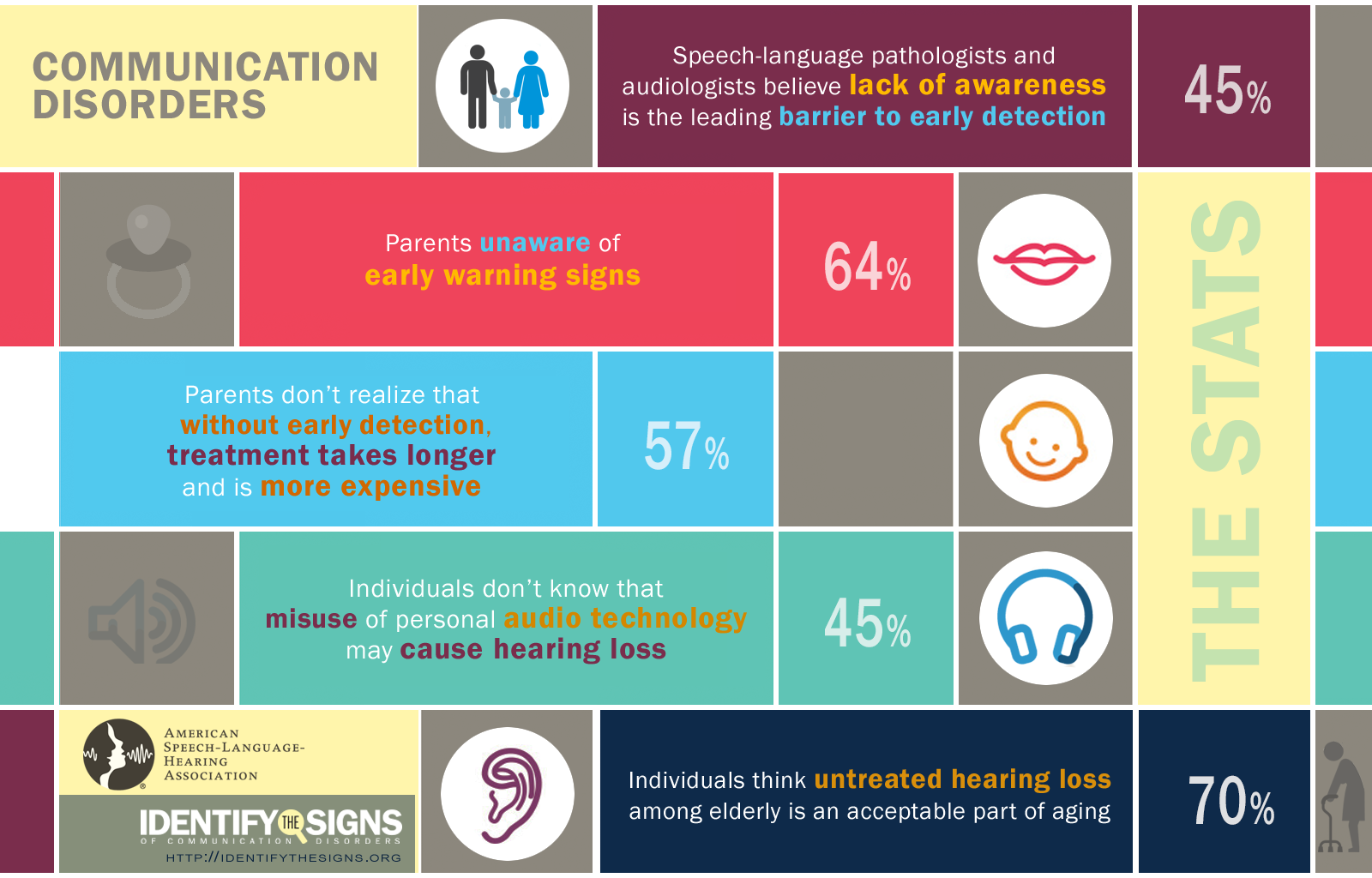
A new, nationwide effort to educate the public about communication disorders was recently launched by the American Speech-Language-Hearing Association (ASHA)—a professional association of which I am a member. Called Identify the Signsthis campaign specifically aims to help people recognize the early warning signs of communication disorders. 

An estimated 40 million Americans have trouble speaking or hearing due to a communication disorder. Millions more family members and friends are also impacted. Here in Utah, there are parents reading this whose children are struggling to speak or understand language; spouses living with partners whose hearing is deteriorating; and co-workers, neighbors and others who see someone who needs help but don’t know what to do. Identify the Signs offers tools to change that.  

With 4 years of experience working in the field of communication disorders, I have seen the debilitating effects that these issues can have when left unaddressed. Too often, people wrestle with these challenges for years because they fail to receive proper, timely treatment. Early detection of speech, language, and hearing issues is absolutely critical to improving academic, social, and career outcomes—and improving one’s quality of life at any age.  

For people with communication disorders, those closest to them are often their biggest asset. Unfortunately, some parents and caregivers are unable to identify the warning signs or dismiss them too readily. A recent poll of speech-language pathologists and audiologists by ASHA reported significant parental delays in getting help for children with communication difficulties. This is just one example of the missed opportunities that commonly occur with communication disorders.  

Through a series of TV, radio, print, digital public service announcements, and the campaign website, the public can learn about the warning signs and be connected to professional help. I encourage you to visit the website, and share the information and resources you find there. Above all, though, I hope you will seek help if you suspect that you or a loved one shows signs of having a disorder.  

Every day, I see in my work that untreated communication disorders often lead to larger academic, social, and developmental issues. Early diagnosis is the most powerful way to reduce or even reverse their impact and can give your loved ones the opportunity to lead the fullest lives possible.

Be sure to check back often this month because I will be posting several flyers/informational brochures from Identify the Signs.

Thursday, May 1, 2014

Better Hearing and Speech Month

This month is Better Hearing and Speech Month (BHSM)!  I am so excited to share information about this annual event, because it is all about raising awareness for my profession as an SLP and the disorders I treat.  Recently, ASHA has started a wonderful campaign called Identify the Signs.  I will be posting a lot about how to identify the signs, so be sure to check back all throughout the month of May! 


For information about children's language, ASHA.org has wonderful information about early childhood development.  Check out this page and click on your child's age range.  Not only do they give some great guidelines of what your child should be doing, but also some ideas on how to further your child's language development.  Overall, you can view this page to learn more about other communication disorders.  


If you would like to spread awareness, go to this wonderful list that ASHA put together on ways to get involved.  There are also some fun perks this month, including discounted or free apps at SuperDuper Inc., Smarty Ears, PocketSLPHamaguchiSounding Board, Smart Apps For Kids, and Smart Apps For Special Needs.  This handout from Super Duper includes some information about BHSM as well as a coloring page to get your little one involved as well.  Be sure to check back often this month because I will be posting a lot more about BHSM, Identify the Signs, and other fun freebies or information.

Thursday, April 24, 2014

Free Apps!!!

Because this month is Autism Acceptance Month there are lots of free and discounted apps.  Check out this post from Smart Apps for Special Needs to see all of them. 


Wednesday, April 9, 2014

National Pets Are Wonderful Month

I love animals, especially cats, so I was excited to learn that April is officially 'Pets Are Wonderful' (PAW) month!  In addition to just being wonderful to have around, many of you probably already know that research shows pets are also good for your health.  They can improve cardiovascular health, reduce stress, help with depression, and even facilitate social interactions among those who have them.  Pets can also be beneficial for the elderly and children with special needs.  There are even some wonderful organizations to help those interested in getting a pet for children with special needs.  The Autism Service Dogs of America (ASDA) is an organization that provides trained dogs to children with autism.  A Rinty for Kids Foundation (ARFkids) helps families with children who have special needs.  They assist in selecting appropriate puppies for families nationwide.  The puppy will then be trained to be a pet-assisted therapy dog.  A $25 donation is required during the application process, and it looks like it takes about a year to receive your dog once the application is submitted.  If you are considering getting a pet, make sure to look up some guides provided online for first time pet owners, especially if you are thinking of getting one for your child.  Here are a few for dogs, cats, birds, and choosing a pet for your child.

Turtle at 45+ years, Missy at 12 months
Just keep in mind that getting a pet can be a pretty intense time commitment. ;) My husband got his pet turtle, George (above), at the age of 11.  He is now 33, and George is now 45 (a guesstaminet given by the vet) and the way things are looking, our daughter may get to take her as a pet when she leaves for college!  As a side note, yup you read that correctly, George is a girl--11 year olds are apparently not great at recognizing turtle gender.  But honestly, we love George, and to celebrate PAW, I will be bringing her to school after Spring Break for an exciting Large Group.  Check back soon to learn more about that!

Tuesday, April 1, 2014

April is Autism Acceptance Month

I'm sure many of you know that this month is Autism Awareness Month, but after doing some research, I have decided to post on Autism Acceptance Month.  Tomorrow, April 2nd is World Autism Awareness Day and many people may be "lighting it up blue" to spread awareness.  But after reading this article from ASAN (Autistic Self Advocacy Network) and learning about the Golden Hat Foundation, we have decided to 'Go Gold,' by wearing gold tomorrow in support of autism acceptance.  There is a list of helpful websites here, if you would like to get involved or learn more information.  Check out this article to learn more about autism.    
   

Friday, March 21, 2014

World Down Syndrome Day

Today is World Down Syndrome Day!  You can read more about it here.  Or you can also read more about Down Syndrome in this post from October.   


Tuesday, March 11, 2014

International Day of Happiness


This year marks the 2nd annual International Day of Happiness on March 20th! Basically, it's a day where we are encouraged to pursue happiness in our lives and countries are encouraged to guide public policies to improve the well being and happiness of everyone. You can read more about it here or get a few ideas on how to spread happiness through The Happiness Challenge here.  What a fun day!  

Monday, March 3, 2014

Developmental Disabilities Awareness Month


This month is Developmental Disabilities Awareness Month and this year's theme is "Ability at Work."  Twenty-seven years ago, in 1987, President Ronald Reagan chose this month to encourage Americans to put away their stereotypes and provide opportunities for individuals with disabilities to reach their fullest potential.  So this month especially, we are encouraged to recognize people with disabilities as valuable, contributing members of our communities.  As a way to participate and raise awareness, The Arc has planned for a National day out.  You can read more about it here.  They simply want to encourage people to go out and enjoy something fun on March 29th.

A few facts about Developmental Disabilities:
  • approximately 4.6 million Americans live with developmental disabilities
  • developmental disabilities are severe & long term 
  • can affect cognitive ability, physical functioning, or both
  • some may be purely physical (e.g. blindness from birth)
  • appear before age 22 & are likely to be life-long 
  • some developmental disabilities include: cerebral palsy, epilepsy, autism, & other neurological conditions
  • there are many causes, but a few include:
    • Genetic or chromosomal abnormalities (e.g. Down syndrome and Rett syndrome)
    • Prenatal exposure to substances (e.g. fetal alcohol syndrome)
    • Certain viral infections during pregnancy
    • Preterm birth

So this month, get active, and spread the word about Developmental Disabilities Month!

Monday, December 2, 2013

Read a New Book Month

I am a sucker for children's books.  If you ask my husband, he'll tell you it's kind of an addiction.  I love buying them, thumbing through them at bookstores, giving them as gifts, and reading children's books to anyone who will listen (preferably a child, because reading them to adults gets a little awkward).  So I am super excited that December is 'Read a New Book Month.'  To celebrate, we will be reading a new book (not new new, but new to our class) for Large Group.  Check out this post to find out what book we will be exploring.
Here are some ways to celebrate this month:
As I was looking through these lists, there were some that I have already fallen in love with and several that I will add to my shopping list.  Some of my favorites this year have come from the BabyLit books.  They are written by Jennifer Adams who lives right here in Salt Lake City.  They are adorable board books taken from classic novels, with fun, creative illustrations that teach concepts related to counting, weather, fashion, opposites, colors, and sounds.  My favorite (although I seriously love them all) is Pride and Prejudice (which is my all time favorite book, so I am a little biased):


But check out the BabyLit website because there are some fun ones, including Romeo & Juliet, Moby-Dick, Alice in Wonderland, & A Christmas Carol, to name a few.  

Okay, another great one that came out this year is The Day the Crayons Quit by Drew Daywalt.  It is hilarious, and wonderful for talking about colors!


One that I have not read yet is Unicorn Thinks He's Pretty Great by Bob Shea.  It looks like a fun one, so it may be one of the "new books" for my daughter this month.


I also love reading classics, and I have always wanted to read Alice in Wonderland, so my new book of the month is going to be Alice's Adventures In Wonderland by Lewis Carroll. 


We'll see if I can squeeze it in with work, holiday madness, and my (almost) 1-year-old's birthday party.

Anyway, I hope you will take some time to check out some of the books talked about on the above lists, or just spend an afternoon at the library with your little one to find a new book to read during bedtime.  We have all heard it, but books are truly wonderful for children's overall development, especially in the areas of speech and language!! ;)  

Friday, November 1, 2013

Prematurity Awareness Month

November is Prematurity Awareness Month.  I have had several nieces and nephews who were born prematurely.  One was a 32 weeker and after spending a month in the hospital he caught whopping cough 2 months later and was again hospitalized for weeks.  So spreading awareness about prematurity is one dear to my heart, like so many others!  These little ones struggle with health and developmental problems, including possible speech and language delays.  

Here are a few facts about prematurity:
  • babies are considered premature if born before 37 weeks
  • in the U.S. 1 in 9 babies are born prematurely
  • Worldwide there are 15 million babies born early
  • it is the #1 killer of newborns
  • those born prematurely can have vision and hearing problems, lung issues, developmental and/or intellectual delays, etc.
  • premies may have feeding difficulties
  • having multiples increases the risk for premature birth
  • Parents has a nice list of risk factors for preterm births

The March of Dimes started the prematurity campaign and has wonderful information throughout their website including information about the campaign, facts about premature babies, annual reports about the progress their campaign is making in communities, ways to support the world prematurity day, etc.  

November 17th is World Prematurity Day.  Socks for Life "is about promoting art activities which will create attention and awareness for preterm babies in Europe and Beyond."  Check out their site for ways to promote awareness or fundraise for a specific project or organization.


The National Premie Foundation also has some nice ways to get involved.  

Last, but not least, I just wanted to give a little information about Kangaroo Care. I'm always amazed when I talk with someone who has just had a baby, especially a premature baby, and they have never heard of Kangaroo Care. It is the first thing I recommend to parents of new babies! Kangaroo Care is amazing and helps babies regulate their body temps, helps with bonding, increases success and production for breastfeeding, regulates breathing, sleeping, and heart rate in baby, helps with weight gain... really the list goes on and on! Kangaroo Mother Care is a nice website dedicated to promoting use of Kangaroo Care!  Check it out.

Wednesday, October 23, 2013

National Sensory Awareness Month

Last, but not least, October is also National Sensory Awareness Month!  The Sensory Processing Disorder (SPD) Foundation has a great explanation page of what (SPD) is. Their website is a wonderful resource for parents, finding support, information, treatment, research, flyers to help raise awareness, etc.!

A few facts about SPD:
  • ranges in severity
  • is caused when the brain has problems organizing sensory information appropriately
  • also known as Sensory Integration Disorder, Sensory Integration Dysfunction (SI Dysfunction), and Dysfunction in Sensory Integration (DSI)
  • some may avoid loud noises, touch, or chaotic environments, while others may seek highly sensory things out
  • although everyone has difficulties processing sensory information at times, those with SPD experience these difficulties continually
  • commonly diagnosed in childhood, but affects adults as well
  • research shows that it is most likely inherited, but other factors (environmental, birth, etc.) may contribute
  • those with SPD are at a higher risk of social/emotional problems
  • often treated directly by an occupational therapist (OT) who specializes in sensory integration, but those with SPD can also have sensory needs met in other therapies or settings with professionals who have a background in sensory integration and who are collaborating with an OT
Sensory needs are best met naturally in a child's environment. Here is a great list of "heavy work activities" you can do with your child at home if they struggle with sensory integration.  This is a list of calming activities put together by Children's: Hospitals and Clinics of Minnesota.  Sensory Savy is blog that provides weekly tips/ideas for children who struggle with sensory processing.  The above activities should only be carried out while under the direction of an OT.  If you have concerns about your child's sensory processing, go here to search for providers in your area.  
   
It looks like there are not any events scheduled in Utah this year, but if you are interested in organizing an event to help raise awareness, check out the SPD Foundation page on tips and tricks for organizers.  You can also contact Susan Geiler for details on how to organize an event, or volunteer for one in your area.  There is also a list of Sensation Celebrations in the U.S. that the SPD Foundation has put together.  

Finally, there is a symposium that will be happening Oct 25-26 in North Carolina, but it will also be offered online!  Go here to get more details.

Monday, October 21, 2013

Selective Mutism Awareness Month


This month is also Selective Mutism Awareness Month.  Many have never even heard of Selective Mutism (SM) before, but it is very real and can be very difficult to treat in some cases.  The Selective Mutism Foundation has a good informative page on their website that explains SM wonderfully!  So check it out.  The American Speech-Hearing Association also has a great article about SM.  This is a summarized fact list from The Educator's Room:
  • Often diagnosed before 5. 
  • There are varying degrees of severity from not making any sounds at all to whispering occasionally to certain people.
  • Some use gestures or will nod their head, others may just just stare or look panicked when spoken to.
  • Social situations, including school, is often referred to as a phobia for these children.
  • It affects 1 out of every 1,000 children.
  • To be diagnosed, the mutism has to have lasted for at least one month, not including the first part of school.
  • It is considered an Anxiety Disorder.
  • Without treatment, children can go without talking during their entire school years.
  • With intervention, selective mutism can be "cured."
  • It is not a communication disorder, but can occur in conjunction with speech or language delays.
  •  Children have the ability to talk and often will at home.